

Access to Work Guide: ADHD-friendly!
Access to Work (A2W) is a Government scheme that can help pay for things for you to stay in work if you have a disability. This could include things like a job coach, standing desk, reminder software… basically anything that can help you do your job like your colleagues are able to. I was SO shocked to find out this existed, after struggling for so long - which is why I talk about it a lot in the ‘Finances’ & ‘Jobs’ chapters of ADHD: an A to Z.
A2W isn’t perfect - mainly because the application process is so bureaucratic that it is incredibly difficult to figure out how to do properly, there can be delays and mistakes can be made (which I explain how to rectify below). It doesn’t actually help you GET a job - not so much access ‘to’ work as access to ‘stay in’ work. So that’s not great if you’re out of work (and ADHD isn’t usually associated with job stability), but it’s better than nothing. And really, really important to know about!
It should be clarified that this is not official or legal advice and no responsibility is taken for following it - but I hope it’s helpful as a rough guide based off my own experiences! It’s also obviously catered towards my experiences of ADHD, but worth mentioning that this could show up in so many different ways, depending on the person, as the case for all health conditions.
Why apply?
A2W can help pay for things based on your needs . This may include things that your employer doesn’t offer as part of ‘reasonable adjustments’ for your condition (like flexible working hours or locations). Examples relevant to people with ADHD might include:
special equipment (for ADHD-ers this could include a headset, noise cancelling headphones, a standing desk, wall planners, time timers, desk planners, a note taking table, a weighted lap pad, fidget toys, watches with reminders, whiteboards, printers, and laminators!)
special software (for ADHD-ers this could include a personal assistant, Dragon dictation software, audible.com, Alexa / Google home, password software such as ‘Dashlane’, Trello / Asana (for task management), or meditation apps such as Calm).
support worker services such as an assistant or job coach to help you in your workplace (I HIGHLY recommend the ADHD Advocate and membership to ADHD Unlocked - where you can get peer support).
Who can apply?
People aged 16+, who live in England, Wales or Scotland, who:
have a paid job, including work experience & internships.
are self employed, if they achieve the ‘Lower Earnings Limit’ per year, currently £6,136 - or if not, have a business plan with a 3 year financial forecast. The Princes Trust & HMRC can help with this.
have a disability or a health condition (physical or mental) which makes it hard for them to do parts of their job, or get to and from work.
How do you apply?
You can apply by phone, or online here, which includes questions on:
Your conditions or disabilities: e.g. ADHD (it’s probably advisable to have a medical diagnosis or doctor’s support in whatever you say here, rather than being self-diagnosed).
Whether you have problems travelling to work: if you do, you’ll be asked to consider other options. A2W won’t necessarily pay for a limo if you struggle with catching the bus, but they might make an assessment of how bad your problems are and whether they or your employer could help in any way, such as by working from home or helping with other transport options.
Whether your condition makes it harder for you to do your job, and if so, how. Any current coping strategies, and whether you know what you need to get help with this.
It’s good to put as much information as you can down, as if you have a ‘good level of knowledge about what support you need’, then your application can be ‘fast tracked’ (point 183) and dealt with faster.
Some examples of how ADHD could make it harder for a person to do their job include:
Becoming overwhelmed with stress and burning out, experiencing panic attacks & exhaustion.
Having trouble doing small administrative tasks, that then take up your whole day & result in a lot of stress.
Difficulty in relationships with colleagues, due to emotional dysregulation, having strong reactions and experiencing sensory overwhelm.
Making impulsive decisions that you wouldn’t have made if you’d thought them out a bit more, which might have long term consequences!
Becoming distracted by noises, sounds, thoughts.. anything at all! Office environments aren’t always great for ADHD.
Difficulty meeting deadlines, organising work, being able to follow processes…
Having poor attention to detail.
Current coping strategies might include things like working from home or flexible working hours, and ways that you could get more help with it include those listed above.
Details about your job, including how long you’ve been there & their contact details
If you’ve not told your employer that you have a health condition that impairs your ability to do your job, it might feel difficult in considering how to tell them, but they will usually need to know if you’re applying for A2W. They should not treat you negatively for this - which is something I talk about in a lot more detail in ‘J is for Jobs’ of my book, ‘ADHD: an A to Z’.
What happens next: the assessment
An A2W adviser will look at your application, including whether you have had any previous assessments, which could help speed things up. If the caseworker is unsure about or can’t agree with you on the appropriate level of support (121) they can refer you for an independent assessment, which they should give you a call to discuss beforehand.
The assessment might take place in person, at your workplace, or virtually - mine was a phone call (given the pandemic)! The assessor will most likely ask you about the questions that you have already answered, possibly helping to identify any other ways that you could be helped to stay in work. It can feel a bit embarrassing to ask for help, but it’s really important that you are as honest as possible.
The assessor will then report back to A2W with their recommendations, usually 3 different options based on cost. A2W will notify you by email about the decision, and post you a copy of your report and a confirmation letter.
You have to sign and return the declaration letter to ATW, which will then allow them to issue a claims pack to your employer. There are lots of different situations describing who pays for ATW - and they might ask your employer to contribute. For support workers, 100% is paid by ATW, regardless of how big your organisation is.
Important to know:
It might take a few weeks or months for A2W to get in touch. The communication can be also be less than ideal - I was told the wrong date for my assessment call and some of my emails bounced. DO NOT GIVE UP! Let them know if no one turns up to the assessment, call, email - do whatever you need to do!
You have to return the signed declaration letter within 4 weeks of the date of the letter which can be difficult if you, like me, receive the letter almost 3 weeks after it was sent due to postal delays!
So make sure that when you get an email or call to let you know a decision has been made, you keep an eye out for the letter and stay in touch with A2W. I’d also get proof of postage when returning it and confirm this by email, so you can show you’ve done it and don’t need to apply all over again!
What do I do if I don’t agree with the decision?
You can request that A2W reconsider their decision, contacting them within 4 weeks of the date on the letter! So this is really important to know: if you’re not happy, contact them immediately. This can be by post, or the email address provided in the letter, asking for the Access to Work Reconsideration Team.
I don’t know if everyone will have the same experience I did, but my decision was overturned. I advise that you read the Access to Work Guidance to check if all the processes were followed correctly.
I’d advise emailing to explain why you think there has been a mistake made as soon as possible. For example, the decision may not be tailored to your individual needs, as required by the guidance. The ‘justification’ for your decision will be able to demonstrate this - and of course, this will be affected by how specific, reasonable and accurate you were in your application. You could also raise any mistakes made during the process, such as evidence not being accounted for properly.
I really recommend taking every opportunity you have to make your case as much as strongly as possible. It can be a bit of a confusing and complicated process, but you have nothing to lose by asking for the help you think you need.
If you have had poor customer service or you think your A2W claim has not been handled correctly, you can also complain using their complaints procedure.
Phew! Then what?
A2W may contact your employer to tell them that they should purchase the support (or part of it, depending on what is agreed), and then send them the claim form and proof of purchase to be repaid. This will obviously be you if you’re self-employed!
It was quite a long, difficult process, but it was so incredibly worth it. It’s really important to know that the Government offer this scheme, and great that they do, because people with disabilities need to be better supported at work.
ADHD Coaching FAQs
What is ADHD coaching? Why is it useful? What can ADHD coaching help with? Is ADHD coaching the same as therapy? All your questions answered here.
1. What is ADHD coaching?
It’s a forward-focused, structured process, involving a collaborative partnership which empowers people with ADHD to transform their lives with unconditional acceptance, in gaining an awareness of their unique strengths, and overcoming challenges.
We have conversations that empower you to figure out what you want, what’s stopping you from achieving that, and how to break it down into actions to implement it. The real work is done by you in implementing the actions between sessions, which can become experiments: learning what works and what doesn’t in a judgement free zone.
It’s like building a house, where coaching is the scaffolding to support you in getting the frameworks in place. Once the strategies that work for you have clicked, you don’t need me anymore - the responsibility lies with you. My job is to work myself out of a job.
2. Is it the same as therapy?
No. Whereas therapy is about answering the ‘why’ questions (e.g why did X happen?), coaching is about the ‘who’, ‘what’, and ‘how’ questions. Therapy is important for processing emotions and feelings, whereas coaching is more forward focused – it’s focused on outcomes, and tangible change.
Therapy is also thought of as a more ongoing, potentially lifelong process, whereas coaching usually tends to be for a time-limited period, such as a few weeks or months.
3. How is ADHD coaching different from normal coaching?
ADHD coaching offers expertise knowledge of this unique neurodevelopmental condition and how this applies to a coaching context. A few examples include:
‘Pills don’t give skills’: coaching can help with implementing strategies of how to use the potential benefits gained from medication, diagnosis or ADHD-awareness. For example, if you’re suddenly able to focus with medication, this helps you choose what to focus on.
‘Doing what you know’: a coach with ADHD expertise understands how to activate an ADHD brain to its full potential – for example, extra preparation with accountability, implementing actions, and overall engagement.
‘Maybe it’s not my fault’: we can offer understanding, education and compassion. It’s very empowering for a person with ADHD to understand their unique neurodiversity, and to replace shame with self-compassion and responsibility. Knowing that certain experiences are a ‘normal’ part of ADHD helps a lot with understanding them and being able to identify ways of asking for help, such as reasonable adjustments.
‘Name it to tame it’: ADHD can often show up in different ways which may not be apparent to neurotypical coaches, such as with Rejection Sensitive Dysphoria. We can offer specific strategies and exercises to address the underlying causes of challenges and help people learn about themselves.
Reaching your limitless potential: ADHD coaching can be useful for everyone to understand how it works and how to get the best out of people who have it. This could also include people who don’t have ADHD themselves, such as a manager of an employee with ADHD.
4. What can ADHD coaching help with?
Everything! Some examples of things I’ve coached people on include:
· Organisation / executive functioning: establishing daily routines & healthy habits, time management, getting ‘boring’ chores done, prioritizing, dealing with distractions / procrastination, and deep cleaning the house (which was said to be harder than getting a Master’s degree!).
· Work (employees, self-employed & unemployed people): in general, how to work int he most effective & happy way. This has included: improving relationships with colleagues, talking about ADHD at work / identifying & asking for reasonable adjustments, overcoming specific challenges such as bullying, meeting deadlines, project management, dealing with demanding workloads, considering career options, identifying strengths, skills & talents, interview practice, delegation, and coping with stress. Access to Work can fund 100% of ADHD coaching for employees.
Studying (school & university students): managing studies, setting routines, structuring essays, identifying how they learn best & potential reasonable adjustments tailored to them, and considering future career options. One teenager said it was much more useful than the careers service at school!
Emotional regulation: improving self-esteem, self-confidence, body-image, overcoming Rejection Sensitive Dysphoria, emotional ‘flooding’ / mood swings, co-dependency, people pleasing, loneliness, and general engagement with people who do / do not have ADHD.
Physical health: relaxation, sleep, overcoming addictions such as alcohol and smoking, observing the effects of medication, implementing healthy habits such as regular exercise and cooking meals.
Everything else! Being an ADHD coach is never boring, because everyone comes with such incredibly unique and amazing stories – every day is different!
5. Should I get a coach?
Coaching can be extremely helpful for anyone, but ultimately, it has to come from YOU. You only get out of it as much as you put in, which is why it’s really important to find a coach that you click with.
If you have something you want in your life – a goal, a change, a challenge you’re facing – then coaching can be incredible, regardless of whether or not you have ADHD. I’ve coached people who don’t have ADHD, and it works just the same.
Everyone can benefit from a moment to pause, step back and figure out what they really want out of their life. I’ve never met anyone who doesn’t want to change and improve something – but often their habits are not matching their intentions. My job is to help them change that to fulfil their long-term goals and dreams.
Book a free introductory call with me here to learn more.

Is ADHD a disability?
Did you know ADHD can be a disability? On International Day of Disabilities, learn more about invisible disabilities.
As an ADHD Coach, I have a window into the lives of incredibly intelligent, passionate, and kind ADHD-ers – they can just often not usually be so kind to themselves! One of my favourite things about coaching is how speaking to someone who understands the unique wiring of your brain can shine a completely new light on the way we see ourselves and the world around us.
Despite around 80% of the UK’s disabled population having invisible disabilities, it’s still an area we don’t quite know how to handle as a society. Although we’re talking more openly about mental health, the shame involved in speaking up about a condition that impacts our ability to be ‘normal’, or to ask for help with this, can still often be incredibly scary and shameful. This can be because we’re relying on other people to believe us, after we’ve taken the difficult step of first believing ourselves.

Here are some of my favourite recent quotes from clients:
“When you say it’s not my fault, sometimes I let myself believe it, and it makes me feel so much better.”
“I was so shocked ADHD could be a disability, but when I think of how it took me 6 hours to do a task that took my friend 1 hour, I think that maybe it is, and maybe that’s not a bad thing.”
“When I was given the help I needed, I realised this wasn’t a ‘special’ adjustment or preferential treatment, as it did just literally level up the playing field between me and other people.”
“I thought I was lazy and stupid for 50 years, until I got the diagnosis.”
The Equality Act says a person is disabled if they have a physical or mental impairment that has a ‘substantial’ and ‘long-term’ negative effect on their ability to do normal daily activities. There are very high standards for being diagnosed with Attention Deficit Hyperactivity Disorder – usually at the level of having certain areas of your life seriously affected, over a long period of time.
So yes, ADHD can be a very serious, invisible disability. We can be disabled by our own brains, such as literally being unable to get out of bed, despite thinking a million hours an hour, suffering our own specialized version of internal torture. We can also be disabled by external barriers in our environments – such as by the stigma associated with ADHD in society, or having to fit into a ‘one-size-fits-all’ world that simply doesn’t make allowances for neurodivergence. or getting it wrong.
Before I was diagnosed, my life was seriously affected in all areas. I couldn’t keep an internship or job, didn’t even have a GP, had extremely bad relationships with my friends and family, binge drank alcohol 4-5 times per week in the aim of quietening down my brain, and was suicidal. When I was diagnosed, I said that ADHD wasn’t a ‘real’ problem. This ironically made me feel better at the time, as I was so scared of being sectioned to a mental health hospital in explaining how crazy I believed I was.
Things were so bad that I went on a 2-week holiday the next day and didn’t come back for a year, holding my hands up in admittance that ADHD was most definitely real, and destroying my life. Accepting this was a disability for me allowed me to stop beating myself up, to ask for the help I deserved, and to start taking responsibility for the things I wanted to change. I accepted that maybe I wasn’t always the problem in every single situation – maybe I deserved to live like everybody else.
From that moment on, I was unstoppable. I published a best-selling book on the modelling industry which was featured on the cover of the Times & Lorraine. I worked in mental health, disability and immigration law for over 2 years during the pandemic, influencing Government on Coronavirus & Brexit legislation - the furthest thing I could have imagined doing when I graduated with the belief I’d never be able to get a job!
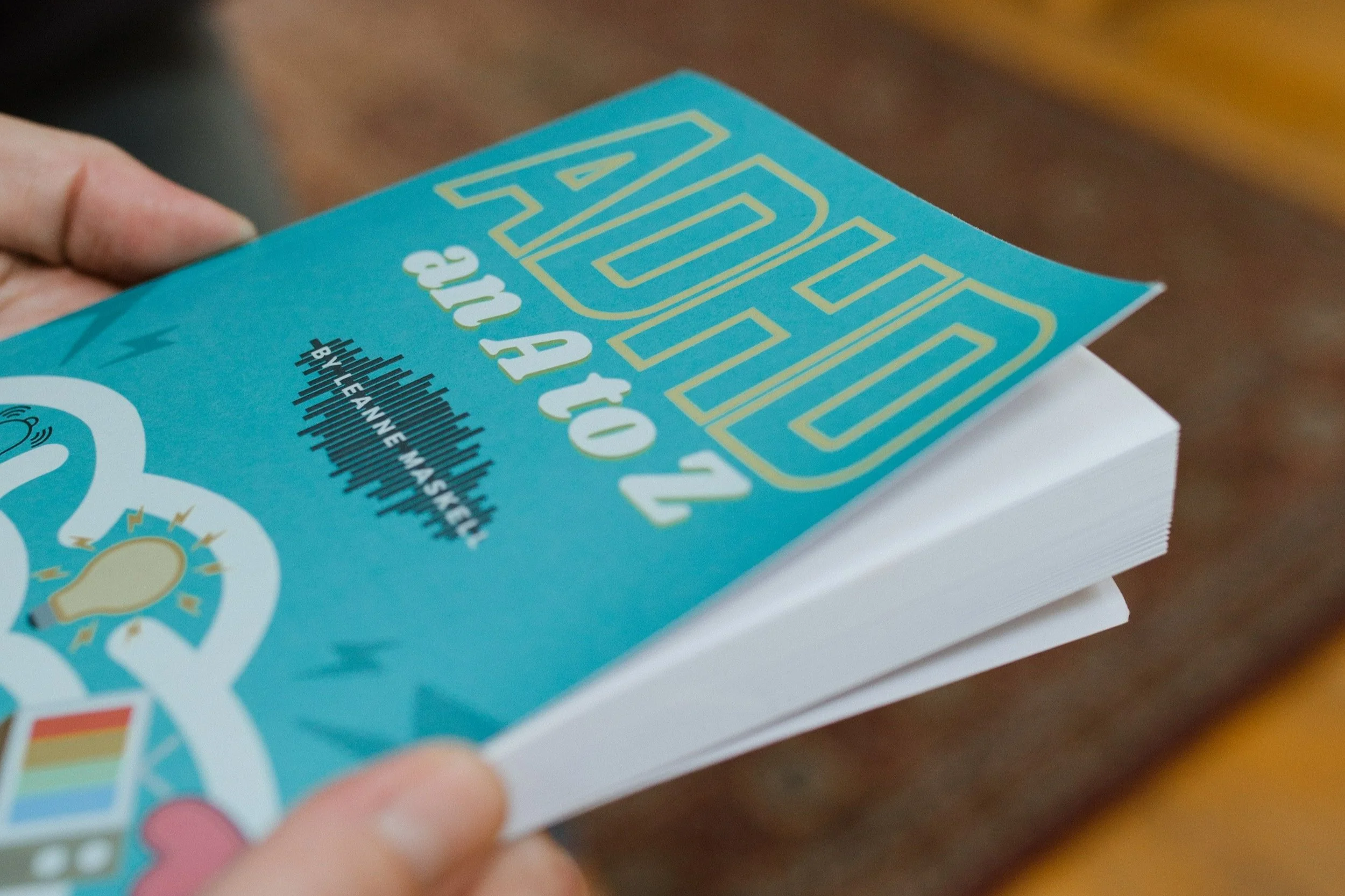
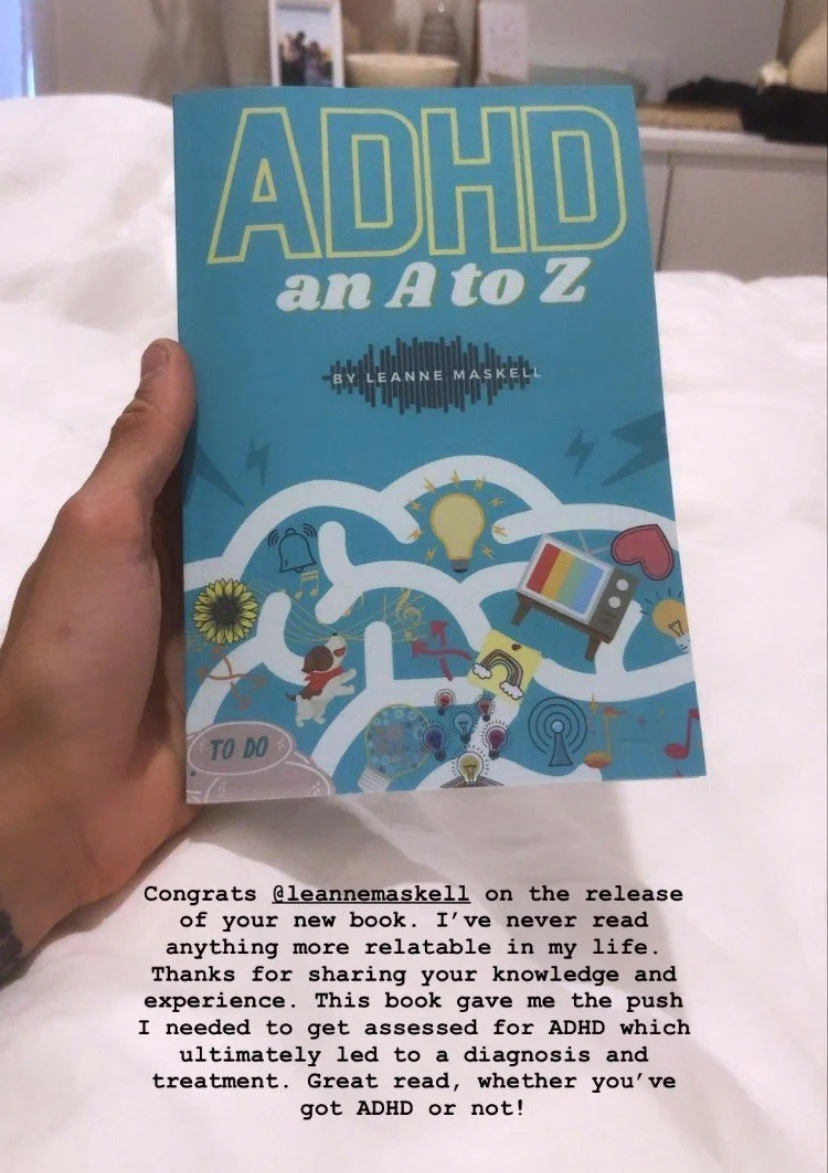
I developed healthy relationships with the people in my life and found hobbies I enjoy. I published a book on ADHD, ‘ADHD: an A to Z’ which led to presenting for companies such as Microsoft. I became a Coach for the ADHD Advocate, finding true fulfilment, purpose and meaning in my work every single day – something I never thought I’d have. This week, I presented on invisible disabilities to Lewis Silkin, a law firm I’d previously dreamed of working at. Life has transformed into a continuing and limitless series of opportunities now that I’ve started working with my ADHD, instead of trying to be ‘normal’.
I still need to have phone backgrounds reminding me to ‘SAY NO’, sleep in my gym clothes occasionally to be able to go to yoga, and the bed sheets would probably never get changed if it weren’t for the cleaner. But in comparison to a few years ago, where I locked myself into an 8-month contract in a too-expensive flat that was directly opposite to my new job, as an attempt to force myself not to quit in the first week, I’m doing pretty well.
So, on this International Day of People with Disabilities, please remember to have some compassion for yourself, and to reflect on how well you’re doing, and how far you’ve come. If nothing else, you’re surviving through a global pandemic! If you know someone with a disability, whether it’s visible or invisible, please be brave enough to have open, honest, and curious conversations with them, exposing yourself the vulnerability of truly listening to what they say.
Here are some facts that shocked me:
Only 51.5% of disabled people are in work, compared with around 81.7% of non-disabled people.
There are more clothing lines in the world for dogs than there are for disabled people.
Disability affects 1 in 7 people worldwide.
ADHD can definitely be a disability, but accepting this also empowers us with limitless extraordinary abilities – book a free introductory call with me now to get started on yours.

Microsoft x ADHD: an A - Z
Leanne Maskell on the difference between an attention deficit and Attention Deficit Hyperactivity Disorder after presenting the ‘ADHD: an A to Z’ book at Microsoft in June 2021.
Microsoft recently invited me to speak to them about Attention Deficit Hyperactivity Disorder, as I published ADHD: an A to Z earlier this year.
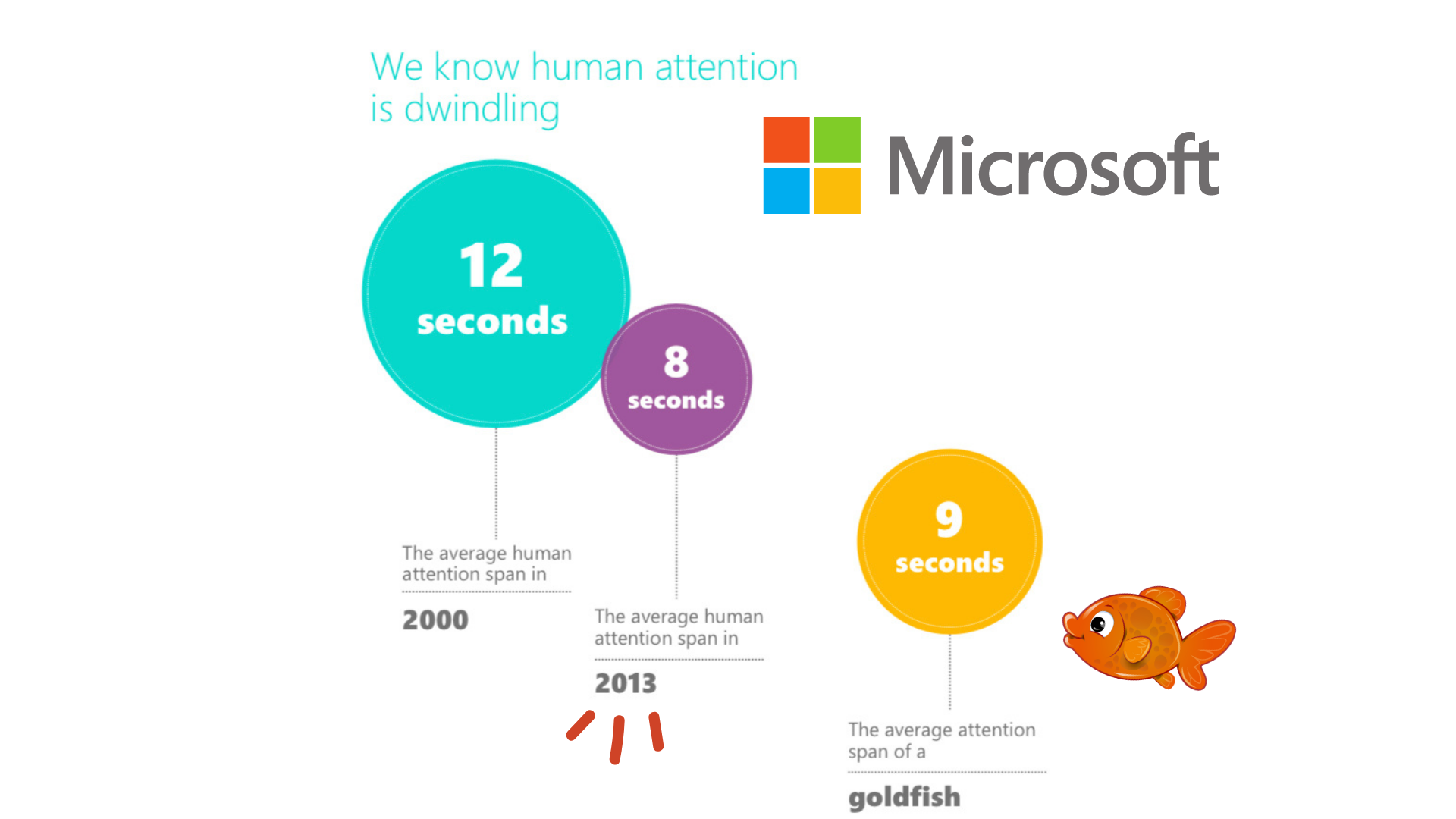
I was pretty excited to present their own research back to them, having recently come across a study from Microsoft Canada in 2015 which found that the average human attention span was shorter than that of a goldfish. It had decreased by a quarter in 13 years.
There’s a distinct lack of research on attention span since then, but Google recommends that websites should load within 1-2 seconds. When we talk about ‘attention’, it’s difficult to know what we mean - doing one task? Listening to someone when they’re speaking? Watching a tv show without looking at another screen?
How I see it, is how long we can choose to pay attention to something, to the exclusion of other thoughts. I recently tried to count to 10 and couldn’t do it without thinking of something else. I asked the audience at the presentation to do the same, who all had the same experiences. I would guess that the average attention span as of 2021 is probably 1-2 seconds (there’s been a distinct lack of research since 2015)!
So, if we all have an attention deficit, how do we classify someone as having ADHD?
As diagnosis rates of have skyrocketed over recent years, the conversation has become more confusing. Researchers have come up with a name for ADHD symptoms induced by technology - ‘Variable Attention Stimulus Trait’. When I was writing ADHD: an A to Z, I kept becoming distracted by whether I should open it up to everyone, second guessing whether ADHD was ‘real’, as the people around me constantly demonstrated signs - forever losing their keys or glasses, an inability to have a conversation without checking their phones, and double or triple-booking their free time with plans.
This continued until I read the NICE guidelines for professionals diagnosing ADHD which required the person to have '2 or more symptoms of hyperactivity/impulsivity and/or inattention which cause at least moderate psychological, social and/or educational or occupational impairment, and are pervasive, occurring in 2 or more important settings.’
In other words, to be medically diagnosed with ADHD, your life has to be pretty much falling apart in at least 2 or more areas. Given that the waiting times for assessment are up to 7 years in the UK on the NHS, and private options can cost well into the thousands, people who think they meet this criteria need some sort of support in the meantime. So the book stayed as it is, focused on ADHD rather than ‘attention’ more generally - though it could very easily be applied to many people who wouldn’t meet the diagnosis criteria.
Being diagnosed with ADHD won’t necessarily change much - learning about it will. My life became far worse for the first 6 months before I took control of my own treatment and insisted on being transferred to the NHS, but it’s a complex rollercoaster to be strapped into, especially when you throw in the opinions of others. Yes, everyone is on the attention deficit spectrum, but this doesn’t invalidate those who are diagnosed with the condition, just as much as it doesn’t invalidate those who aren’t. Ultimately, it’s just a label.

It overwhelms me to think about neurodiversity and the fact that we all have different brains in one way or another. The sheer amount of information on the internet means that it’s incredibly easy to self-diagnose and work yourself up into a place of believing you ‘have’ some kind of ‘condition’, ‘disorder’ or ‘illness’.
Typically, there’s no brain scans involved in diagnosing ADHD, as there would be if you had a tumour, for example. It is quite simply just one person’s opinion. Yes, they might be medically qualified and/or you may be paying them a lot of money. But at the end of the day, you are the person who knows you best. Having a 1-2 second attention span is probably pretty normal as of 2021, and it doesn’t mean you need to be diagnosed with ADHD.
If you find yourself unable to pay attention, start with the root of the problem. Remove the distractions (i.e technology). Sit. Breathe. Practice counting to 10. Repeat.
If you feel like you need help, get that help - and get off Google.

why I wrote a book about ADHD
Leanne Maskell on being diagnosed with ADHD age 25, navigating the 7 year waiting lists, and publishing her second book, ‘ADHD: an A to Z’.
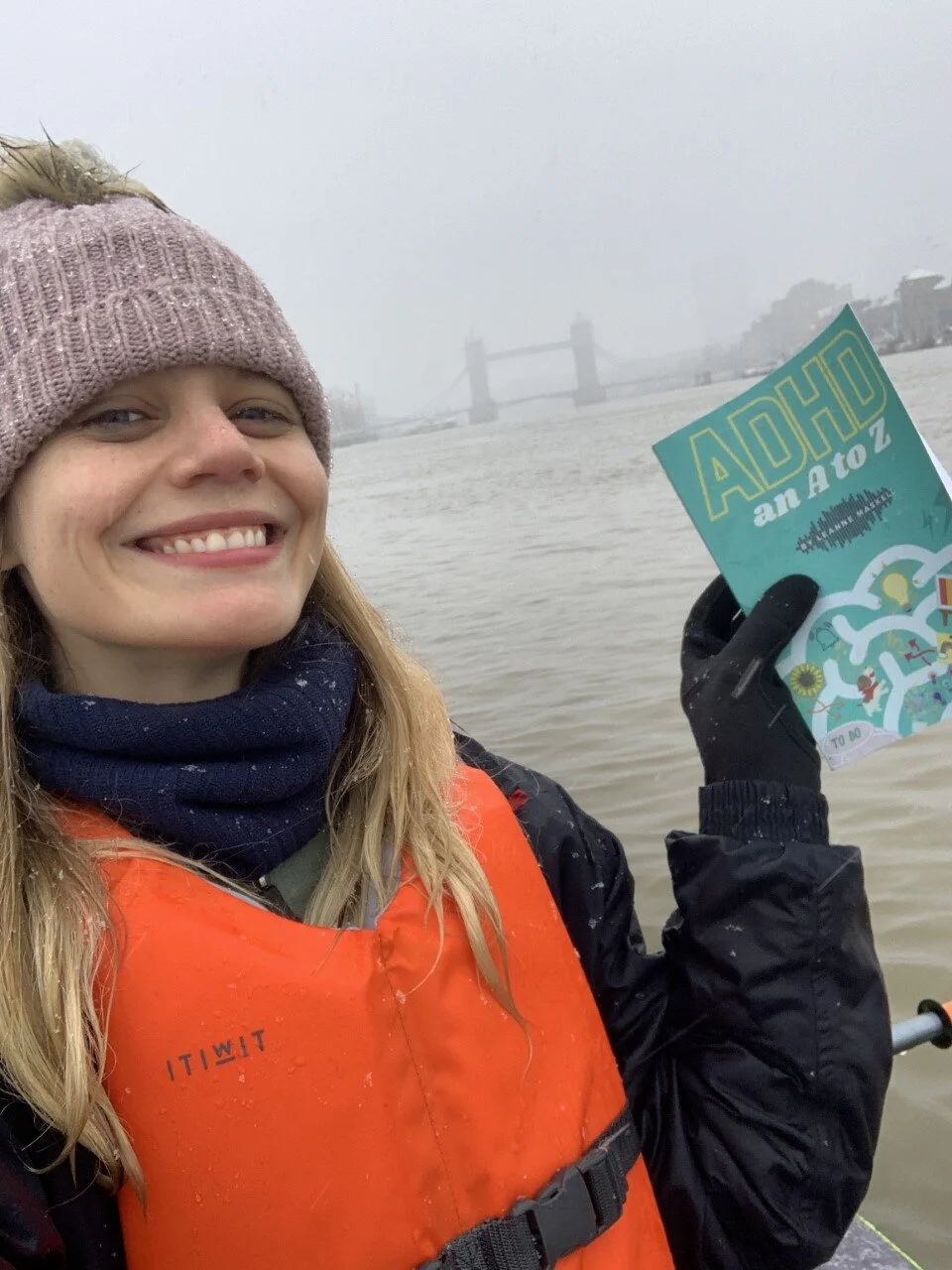
Last month, I published a book about Attention Deficit Hyperactivity Disorder. I wrote about 95% of it in about 3 weeks last year, after finally changing my GP surgery (a mere 6 months after moving house). My new doctor told me that if I wanted to change my medication dosage, then I’d need to go on the NHS waiting list to go to the ‘ADHD Centre’ again.
I felt the nervous pit of anxiety in my stomach as I tried to mentally predict what would happen if/when I became used to my current level of medication and needed to move up to the highest dose, and what would happen after then.. but pulled myself back into the present to ask how long that would be.
‘7 years’.
I laughed almost as much as when a psychiatrist first told me that the ‘quirks’ of my personality that had developed over the years since I had graduated from university were actually ADHD, not any of the other medical conditions that I had begrudgingly self-diagnosed myself with. I didn’t think ADHD was ‘real’, and definitely not serious.
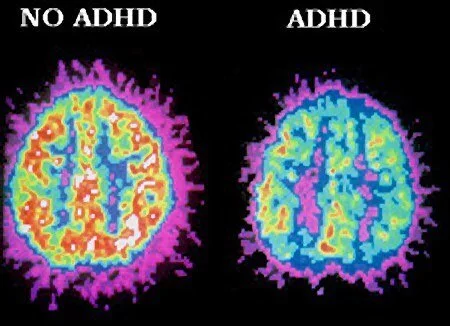
spolier alert: ADHD is a real, very serious, neurodevelopmental condition
After confirming that the doctor had said, yes, there were medical waiting lists for people to see doctors that were up to SEVEN YEARS LONG, I asked how people survive in the meantime. She didn’t have an answer. I thought of the particularly bad year I had experienced until I finally admitted there was some sort of problem I didn’t have control over happening inside of me. I would wake up every day devastated to still be alive and to have to spend another day being me - feeling like my brain was permanently on fire became an odd sort of (very depressing) normality.
That went away when I was diagnosed, though the diagnosis process itself was some sort of real-life horror-movie specifically curated for the ADHD mind. Navigating your way through the shame of admitting you have a problem and then trying to extract information about what this process is ‘supposed’ to be like on the internet is hell. I was too afraid to ask any doctor for help for years, because I was convinced that the natural next step would be being sectioned in a mental health hospital.
So is trying to navigate private psychiatrists, costing £400 per session, and asking people who have ‘known you throughout your life’ to answer questions about you. It’s an incredibly shame inducing experience to have to admit that you are incapable of living normally to the people around you, many of whom don’t want to admit that you have ever suffered, in case it reflects badly on themselves. It’s horrible trying to tell whether ADHD is ‘real’ or not, trying to understand whether it’s just being ‘distracted’ or whether you should indeed take the medication that is being prescribed to you by a medical professional, despite it costing so much money and the people around you telling you that it’s ‘speed’.

how my brain feels (really quite painful and difficult to pull apart)
This is all hard enough, but even more difficult when you’re just trying to wade through the shame of existing, feeling like everyday is turning up to an exam that you’ve studied really hard for, but the exam questions are all on a different topic - to then motivate yourself to get help. My brain feels like carrying around a school class of children, but the teacher’s left the room, and just trying to get them all to shut up for JUST ONE SECOND takes every ounce of willpower I have. So there isn’t a whole left over to navigate doctors and therapists, medication and illnesses. There’s just the Googling ‘AM I GOING CRAZY’ 20 times per day, and confirming to yourself that yes, you probably are. Then being distracted by something else.
So, having been able to get help and finally have the teacher come back into the room (where like magic, the children all fall into submission), I thought ‘someone should do something about that’. So I wrote a book. The words poured out of me, such as how to get diagnosed without waiting for 7 years / falling out with everybody you know / becoming convinced that maybe the psychiatrist is trying to financially exploit you, and then transfer over to the NHS so you don’t have to pay £300 A MONTH FOR THE REST OF YOUR LIFE TO BE ABLE TO EXIST LIKE A ‘NORMAL’ HUMAN BEING WHO DOES NOT HAVE 5 SIRENS BLARING IN THEIR MIND AT ANY ONE TIME.
In true ADHD style, I became ‘hyper-focused’. It was all I could pay attention to or talk about for a few weeks, finishing up to chapter W, then I went on holiday. I did not pick up the book again for 10 months, except to send it to people who messaged me about ADHD occasionally who all told me that I needed to publish it. This is what ADHD is. It’s not always a ‘deficit’ but more of an inability to control what your mind does: it’s the kids ruling the school, deciding what subjects they’re going to do that day. They might be brilliant at it, but then they’ll ditch it just before getting the certificate for another one, leaving a long list of unfinished projects and ashes of dented self-esteem in their midst.

Me on holiday, completely forgetting about the book I had spent the last 3 weeks of my life obsessing over to the exclusion of everything else for the foreseeable future.
It means that you can pay lots of attention to the things you’re interested in, but NONE AT ALL to the things that you’re not - even to the point of literally falling asleep when you’re checking out (I used to do this all the time in class). It sounds like common sense, but imagine if your brain just stopped playing ball when you tried to make it do the things you don’t ‘want’ to do. It feels like someone else has control of your decisions, which is pretty scary when you’re strapped in the chair and forced to watch, eyes sellotaped open.
Luckily, the spark came back when I started seeing an ADHD coach. Actually, when I found out that there is Government funding to help people with disabilities (including ADHD) get / stay in work, including job coaches. I literally couldn’t believe I had spent so many years obsessing over how to do this, and there had been support there all along: people needed to know about this.
That little spark of passion (and my brilliant coach) managed to help me get the manuscript over the finish line and into a real life book. That’s the amazing thing about ADHD - a little goes a long way, and we are REALLY QUITE ENTHUSIASTIC when we are inspired - we can get things done that would take other people years. Our ‘dysregulated’ emotions mean that we can quite easily forget about the life-destroying shame we’d been feeling just the night before, and pick ourselves up to try again. Persistence is the key to success, just like those who are actually ‘crazy’ enough to think and act differently without stopping to think about it. We’re a creative, compassionate and extremely courageous bunch, us ADHD-ers.
Refusing to accept ourselves, whether we have ADHD or not, means that we ultimately are procrastinating by beating ourselves up for being who we are. This mass wastage of energy could be diverted into yourself, if you started working with what you’ve been given, rather than against it.
If I had stopped trying to force myself to try and live a life that I ultimately didn’t want to live, then I would have been able to enjoy my early 20s, instead of wishing them away. I won’t ever get that time back, and we won’t ever get this moment back: do you want to spend it hating yourself, or enjoying the ride?