

Is ADHD a disability?
Did you know ADHD can be a disability? On International Day of Disabilities, learn more about invisible disabilities.
As an ADHD Coach, I have a window into the lives of incredibly intelligent, passionate, and kind ADHD-ers – they can just often not usually be so kind to themselves! One of my favourite things about coaching is how speaking to someone who understands the unique wiring of your brain can shine a completely new light on the way we see ourselves and the world around us.
Despite around 80% of the UK’s disabled population having invisible disabilities, it’s still an area we don’t quite know how to handle as a society. Although we’re talking more openly about mental health, the shame involved in speaking up about a condition that impacts our ability to be ‘normal’, or to ask for help with this, can still often be incredibly scary and shameful. This can be because we’re relying on other people to believe us, after we’ve taken the difficult step of first believing ourselves.

Here are some of my favourite recent quotes from clients:
“When you say it’s not my fault, sometimes I let myself believe it, and it makes me feel so much better.”
“I was so shocked ADHD could be a disability, but when I think of how it took me 6 hours to do a task that took my friend 1 hour, I think that maybe it is, and maybe that’s not a bad thing.”
“When I was given the help I needed, I realised this wasn’t a ‘special’ adjustment or preferential treatment, as it did just literally level up the playing field between me and other people.”
“I thought I was lazy and stupid for 50 years, until I got the diagnosis.”
The Equality Act says a person is disabled if they have a physical or mental impairment that has a ‘substantial’ and ‘long-term’ negative effect on their ability to do normal daily activities. There are very high standards for being diagnosed with Attention Deficit Hyperactivity Disorder – usually at the level of having certain areas of your life seriously affected, over a long period of time.
So yes, ADHD can be a very serious, invisible disability. We can be disabled by our own brains, such as literally being unable to get out of bed, despite thinking a million hours an hour, suffering our own specialized version of internal torture. We can also be disabled by external barriers in our environments – such as by the stigma associated with ADHD in society, or having to fit into a ‘one-size-fits-all’ world that simply doesn’t make allowances for neurodivergence. or getting it wrong.
Before I was diagnosed, my life was seriously affected in all areas. I couldn’t keep an internship or job, didn’t even have a GP, had extremely bad relationships with my friends and family, binge drank alcohol 4-5 times per week in the aim of quietening down my brain, and was suicidal. When I was diagnosed, I said that ADHD wasn’t a ‘real’ problem. This ironically made me feel better at the time, as I was so scared of being sectioned to a mental health hospital in explaining how crazy I believed I was.
Things were so bad that I went on a 2-week holiday the next day and didn’t come back for a year, holding my hands up in admittance that ADHD was most definitely real, and destroying my life. Accepting this was a disability for me allowed me to stop beating myself up, to ask for the help I deserved, and to start taking responsibility for the things I wanted to change. I accepted that maybe I wasn’t always the problem in every single situation – maybe I deserved to live like everybody else.
From that moment on, I was unstoppable. I published a best-selling book on the modelling industry which was featured on the cover of the Times & Lorraine. I worked in mental health, disability and immigration law for over 2 years during the pandemic, influencing Government on Coronavirus & Brexit legislation - the furthest thing I could have imagined doing when I graduated with the belief I’d never be able to get a job!
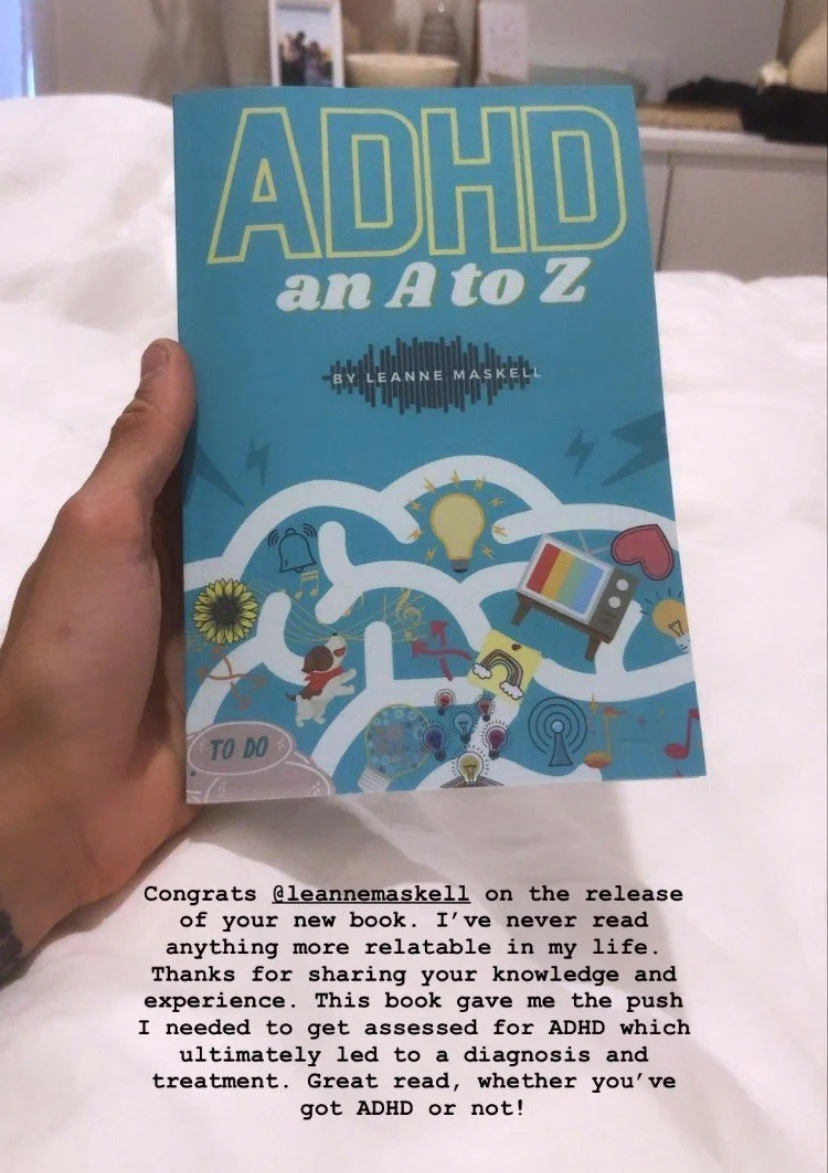
I developed healthy relationships with the people in my life and found hobbies I enjoy. I published a book on ADHD, ‘ADHD: an A to Z’ which led to presenting for companies such as Microsoft. I became a Coach for the ADHD Advocate, finding true fulfilment, purpose and meaning in my work every single day – something I never thought I’d have. This week, I presented on invisible disabilities to Lewis Silkin, a law firm I’d previously dreamed of working at. Life has transformed into a continuing and limitless series of opportunities now that I’ve started working with my ADHD, instead of trying to be ‘normal’.
I still need to have phone backgrounds reminding me to ‘SAY NO’, sleep in my gym clothes occasionally to be able to go to yoga, and the bed sheets would probably never get changed if it weren’t for the cleaner. But in comparison to a few years ago, where I locked myself into an 8-month contract in a too-expensive flat that was directly opposite to my new job, as an attempt to force myself not to quit in the first week, I’m doing pretty well.
So, on this International Day of People with Disabilities, please remember to have some compassion for yourself, and to reflect on how well you’re doing, and how far you’ve come. If nothing else, you’re surviving through a global pandemic! If you know someone with a disability, whether it’s visible or invisible, please be brave enough to have open, honest, and curious conversations with them, exposing yourself the vulnerability of truly listening to what they say.
Here are some facts that shocked me:
Only 51.5% of disabled people are in work, compared with around 81.7% of non-disabled people.
There are more clothing lines in the world for dogs than there are for disabled people.
Disability affects 1 in 7 people worldwide.
ADHD can definitely be a disability, but accepting this also empowers us with limitless extraordinary abilities – book a free introductory call with me now to get started on yours.