

How to deal with Rejection Sensitive Dysphoria
A little known but widely felt impact of ADHD is a serious hyper-sensitivity to rejection. When I told a previous colleague about this, they looked at me like I was speaking gobbledegook. I get it – ‘Rejection Sensitive Dysphoria’ (RSD) sounds like your ultimate ‘snowflake’ medical condition, the need for positive feedback at all times out of fear we might not be able to handle any negative feedback.
However, people with ADHD are by no means snowflakes. The average ADHD-er will have suffered a lifetime of being considered inadequate, repeated failures, feeling ‘different’, beating themselves up, and uncontrollable emotional mood swings. RSD is the symptom that has only been linked to ADHD, rather than any other condition, because it’s:
a ‘reaction’ to something (as in, not chemically-induced)
not typically long-lasting (as in, we’ll probably awkwardly feel fine in a few hours)
incredibly extreme – to the point that a person might feel suicidal. This is very dangerous in the moment, and very upsetting to deal with later on, when we feel okay again.
I think of it like having a toddler take over my brain, an emotional panic attack. Your brain becomes ‘flooded’ with emotions so paralysing that you might not be able to think rationally. This can often come from completely imaginary scenarios, such as someone replying late to our message, or being called in for a surprise meeting at work.
RSD can lead to people pleasing and anxiety, in a desperate attempt to try and avoid feeling rejection (which nearly always backfires). It can lead to depression, in an attempt to avoid any potential scenarios where we could be rejected. It can lead to perfectionism and overworking, where we set impossible standards for ourselves to meet, moving the goal posts when we do.
Ultimately, it can result in self-sabotaging – impulsive, emotionally-charged decisions that trap us in a cycle of regret, self-blame, and loneliness. We might quit jobs, end relationships, and cause arguments for seemingly no reason, not understanding our own behaviour. We can gas-light ourselves into seeing rejection that doesn’t exist, resulting from a core lack of trust in others to like us for who we are.
This is especially obvious in romantic relationships. Our partners may be bewildered at our overreactions to small things, such as them being late, or not ‘interested’ enough in us. They might be confused as to why their assurances of how much they like us are never enough, or why they have to keep trying to prove it. They might not understand why we think we are so difficult to love, and eventually, believe what we say – a self-fulfilling prophecy.
Our anticipation of rejection can sadly lead us to self-sabotage relationships with people who care about us, resulting in the feeling that love is ‘conditional’. The cruel irony is when we reject others in the hope of protecting ourselves, such as cutting out a friend in the ill-conceived hope of the other person showing they care.
Having ADHD and RSD is incredibly lonely. It means you’re struggling with all the symptoms of ADHD in a vacuum of loneliness, where you may believe that nobody truly cares about you. The symptoms bounce off each other – not being able to complete things due to insecurity of previous failures and an inability to ask for help, exacerbated by perceived loneliness and rejecting everyone as a result. It’s very dangerous to experience the extreme mood-swings in the moment, which can feel scarily intense, and may be why 4 in 10 women with ADHD have attempted suicide.
Treating RSD
It’s very difficult to treat RSD because it hits so quickly, and the emotions can overwhelm a person so suddenly that they can find themselves experiencing it at the same time as everybody else. However, it is NOT impossible – this is the main thing I coach people on now!
1) Understand your ADHD
I wrote ‘ADHD: an A to Z’ to help people overcome challenges related to their ADHD without requiring medication, or a diagnosis (as these can take 7 years on the NHS!). By treating some of the symptoms we experience, we can start building up trust in ourselves to feel as though we’re capable of having a stable life, so we don’t perceive potential rejection as a life-ruining concept in and of itself. There’s also certain types of medication which can help with RSD, which I’d recommend talking to your doctor about.
2) Recognise your RSD
I only started overcoming my RSD when I learned it was a proven medical condition. This cut off the part of my cycle where I started catastrophizing about how terrible I was and convincing myself I needed to be sectioned for these extreme mood swings. Once we recognise RSD, we can label the experience of it, removing ourselves from it. It’s something that happens to you, it’s not who you are.
Try to identify situations where this is likely to happen (e.g when dating), and have a list of things that make you feel calm, happy and secure (e.g reading a book), that can distract you from your feelings. When you’re feeling overwhelmed, try to do one of these activities as soon as possible. Remind yourself that this will pass, and you can simply ride the wave out. Try to leave any triggering situations as soon as possible to calm down, and be as kind to yourself as you can.
3) Build up your self-compassion
Ultimately, the key to dealing with rejection is to build up your self-esteem so that it’s not reliant on the acceptance of other people, just yourself. This comes from having self-esteem, and compassion for ourselves – I’ve seriously had months where I’d have to write myself love letters or lists of things that proved I was a capable human being every morning.
4) Talk to people you trust about it
It can help to discuss this with other people, even if you don’t have an ADHD diagnosis. Knowing that it exists and other people experience the same thing proves you are not alone. Although I wouldn’t recommend insisting on only positive comments from now on, you can explain to people how you would best react to certain types of feedback and criticism. You don’t even need to call it RSD - you can just explain how you operate best in response to feedback (such our texting style!).
For example, I know that I deal very well with negative feedback when I can understand it, and when I have time to process it – so having it written down is always very helpful! It’s also good to explain to people in your life how brilliantly you respond to positive feedback!
5) Reframe your thoughts
This is by far the most helpful thing I’ve done to treat my RSD. I’ve literally trained myself to do this now so that it’s automatic whenever I begin to feel the overwhelm of rejection:
What is the thought that’s bothering you?
Can you prove this to be 100% true? What proof do you have?
What is believing this thought doing to you? How is it making you behave and think?
What is the opposite of this thought? Can you find proof for this being true instead?
By training ourselves to trust other people to like us for us, and for this to be our automatic thought rather than searching for the reasons people wouldn’t like us, we can overcome RSD. This involves being aware of our tendencies to perceive rejection, and actively combatting any worries, reminding ourselves that we are liked and accepted for who we are. Typically, people feel the same way about you as you do about them!
Our brains are constantly making up stories but realising that we have the power to pick what thoughts we believe is genuinely life changing. We just have to choose to do so.
Having RSD does not mean there is anything wrong with you. It means that you feel things on a deeper level than most people, and as a result, tend to be more compassionate. Understanding the stress and emotions that your body can experience in one go means that you tend to be good at understanding the stress of other people, as it arises in small manageable chunks! Remember to be kind to yourself, no matter what. You are deserving of love and the people around you will love you unconditionally, even if it doesn’t always feel that way
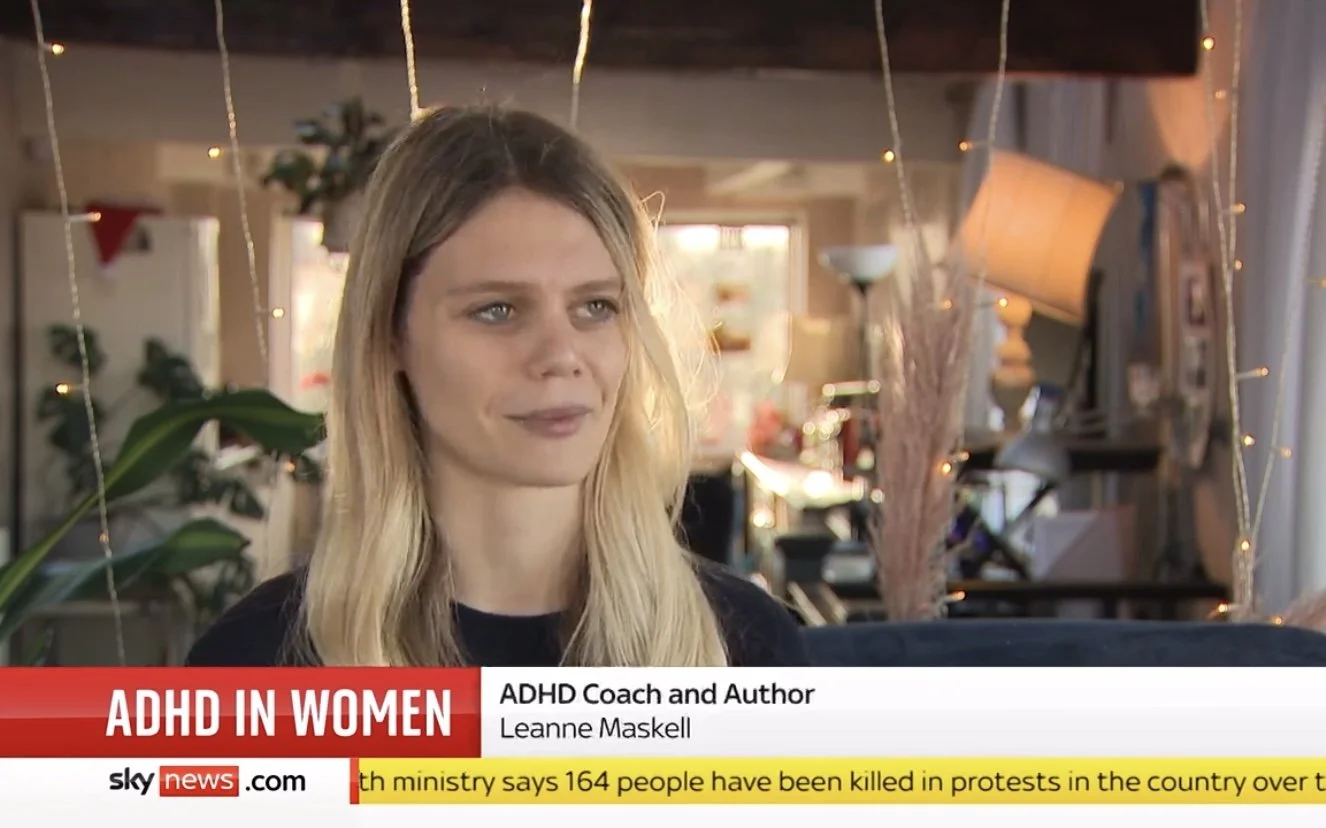
Women, Girls & ADHD: talking to Sky News
Did you know that 1 in 4 women with ADHD have attempted suicide, or that it’s 5x more likely to be diagnosed in boys than girls? Many people automatically think of hyperactive boys when they hear about Attention Deficit Hyperactivity Disorder - myself included, when I was diagnosed at age 25. 4 years on, now working an ADHD Coach & author, I talk to women and girls every day who share my story, after years of needlessly struggling in the dark by themselves.
ADHD is a neurodevelopmental condition related to symptoms of inattention (poor concentration & memory), impulsivity (in emotion, thought & action), and hyperactivity - both physical and mental. I can easily go a month without exercising, but my brain can’t go a minute without exploding with thoughts.
As a child, I was literally always falling asleep in class. It was only from writing, ‘ADHD: an A to Z’, that I learned this can be a symptom of ADHD - where your nervous system disengages from boredom. This might just sound awkward in a classroom setting, but how about whilst driving a car? I’ve crashed every single car I’ve driven, fortunately deciding to stop by myself after writing off the third, before I ended up killing myself or somebody else.
This was before I was diagnosed with ADHD. Before then, I had also experienced severe depression, eating disorders, self-harm, anxiety, lived on chocolate, binge drunk alcohol to solve my problems, and couldn’t sit down long enough to apply for a job. I knew the way I was living was not normal, but it felt like someone else had a remote control to my brain - I couldn’t trust myself with being a functional adult.
From the outside, I had a law degree, straight A’s in my A Levels (without cheating, as my economics teacher had asked the entire class in surprise), and was living a picture-perfect life on Instagram. When I finally tried to get help myself, doctors told me I was fine, because I had a law degree. They said maybe I just had ‘emotional problems’ and should go to therapy. I’d leave therapy sessions after speaking non-stop for 55 minutes, cementing myself into another week of ruminating on the past.
By the time I’d decided to pay £400 to see a private psychiatrist, blaming myself for not being pushy enough, I’d Google-diagnosed myself with about 6 different mental illnesses. ADHD was not one of them. I didn’t even have a GP at the time, let alone a stable job, place to live, or support network of friends and family. I had given up on living and this was my last hope - but it shouldn’t have had to reach that point for me to get help.
Since being diagnosed and learning about ADHD, my life has changed beyond recognition - I have all of these things and more, in being able to understand and accept my neurodiverse brain. I was able to start living my life like everybody else I knew.
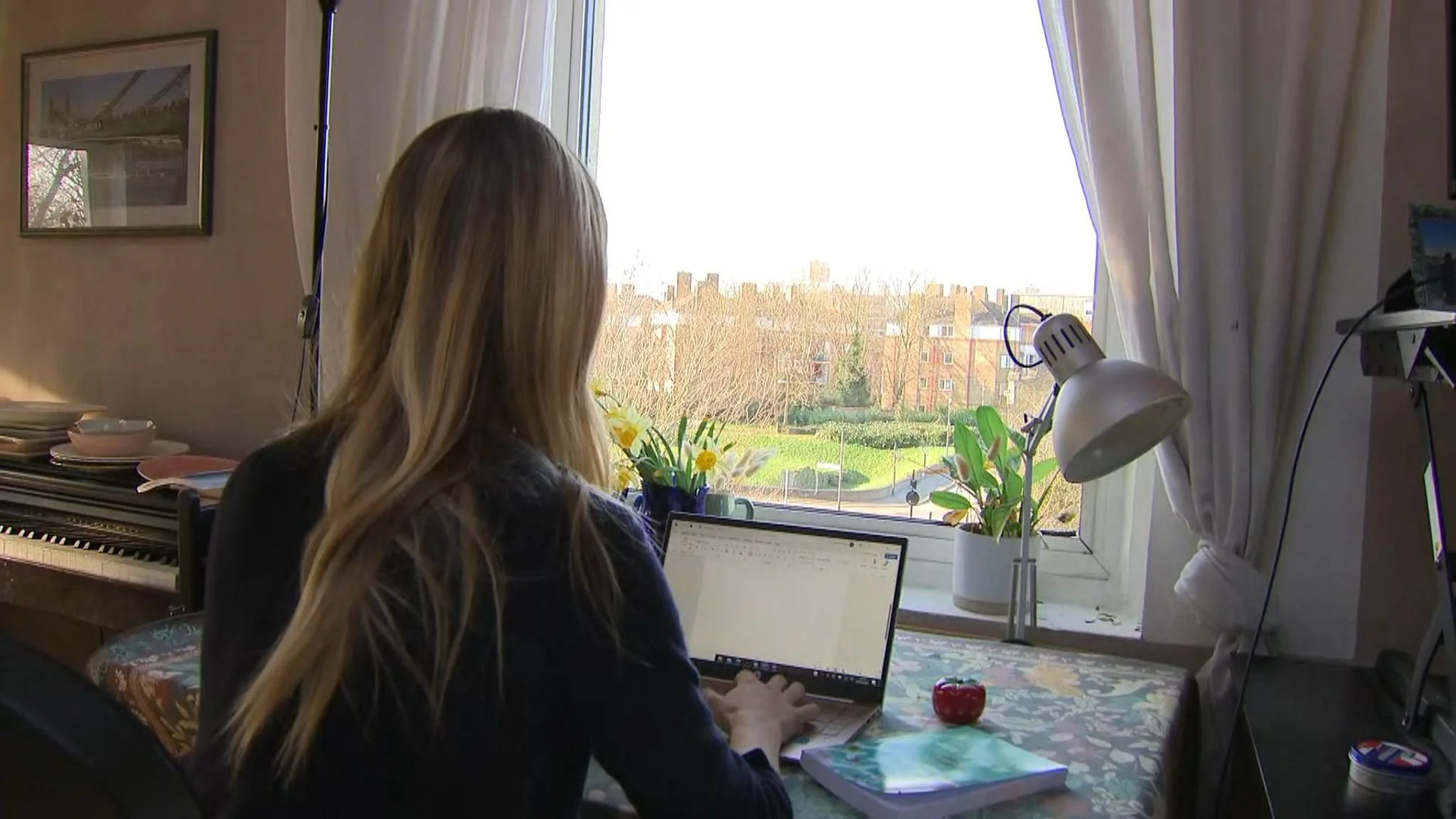
I think part of the reason it was missed in me and other women or girls for so long is due to:
a) ‘untraditional symptoms’ - like overthinking, wildly strong mood swings reacting to the situation (Rejection Sensitive Dysphoria), an addiction to screens, hyper-focusing, suicidal ideation, indecisiveness, daydreaming, and so on. Medical professionals are more likely to associate these symptoms with other conditions, especially if a girl isn’t physically hyperactive.
b) ADHD being masked by co-existing conditions or poor lifestyle conditions - there’s a strong crossover with Autism, depression, anxiety, eating disorders, obesity, alcoholism, drug addiction, self-harm, and pre-menstrual syndrome (as it’s strongly affected by estrogen). ADHD brains seek dopamine, which can make them more susceptible to addictions and poor choices - an estimated 30% of prisoners have ADHD.
c) communication styles - whereas men tend to be more direct, women tend to be more prone to people pleasing and saying what they think people want to hear - especially ones with ADHD. If a doctor said I was fine, I’d end up agreeing with them, until I left their office. It can be very difficult to insist that you need help and to get that help - especially if you feel awkward asking for help in the first place, as many people with ADHD do.
d) situational-aspects of ADHD - due to symptoms showing up differently across a persons’ life, they may think they’re fine because they can get good grades, or because they’re super clean, for example. However, it often shows up in areas where we’d least expect it. For example, I could do a month’s worth of work in a day when I worked in law, but filling in an excel spreadsheet that should take a couple of minutes would take me an entire week, sending me into a spiral of anxiety.
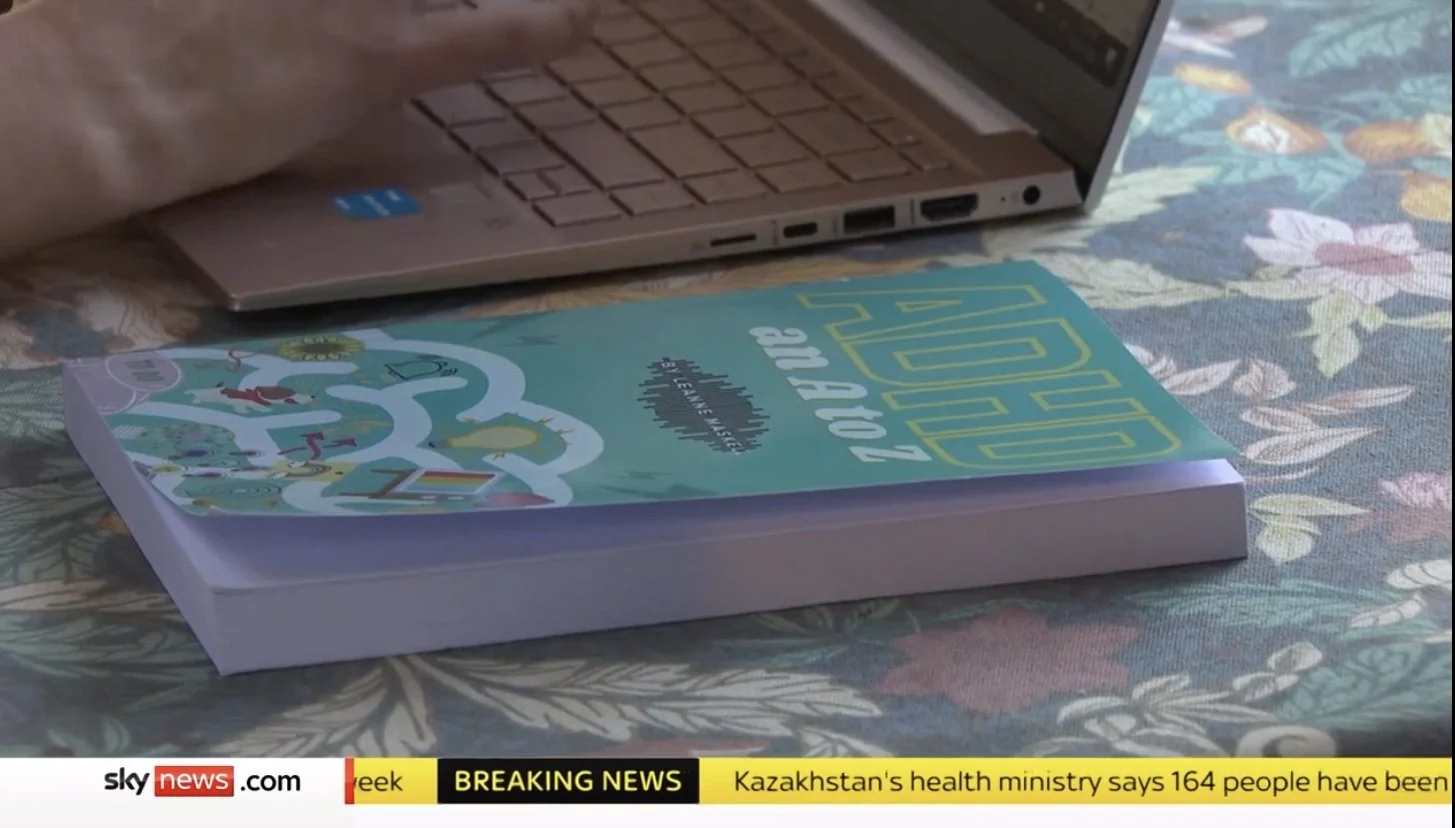
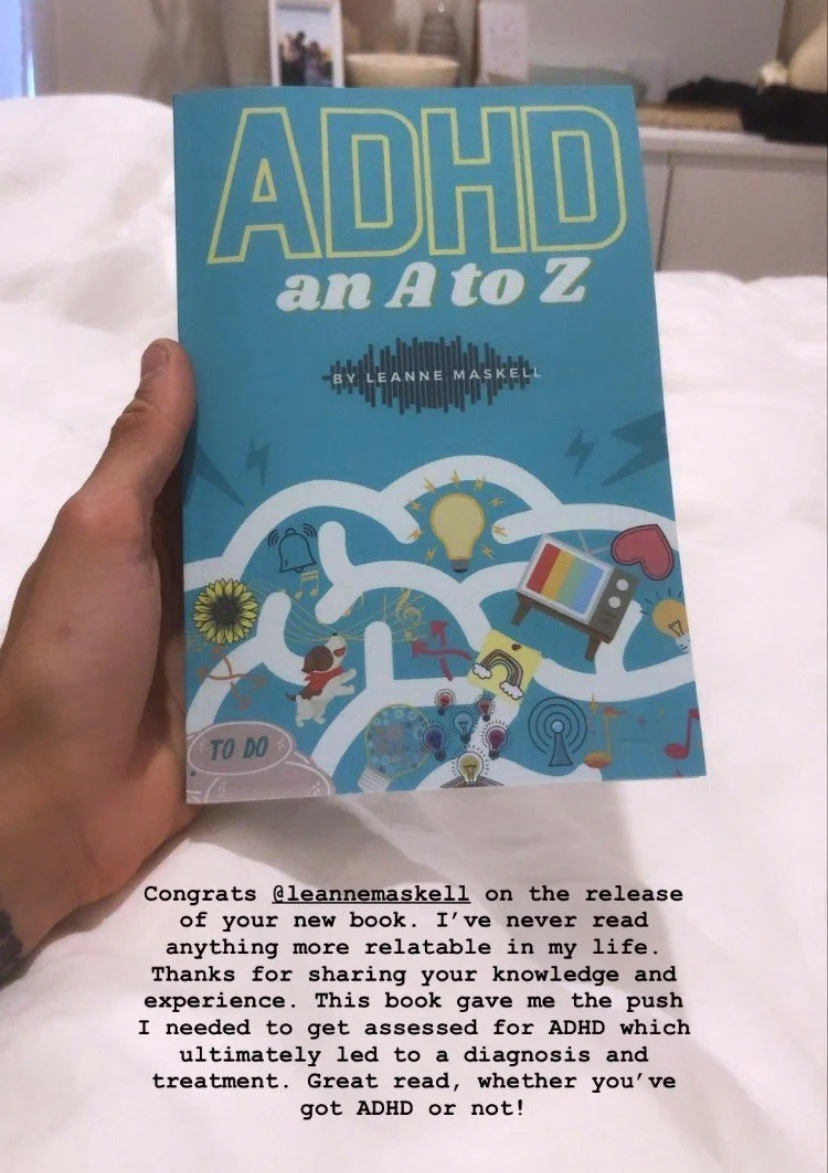
I wrote ADHD: an A to Z after my GP told me about the 7 year waiting list for ADHD assessments on the NHS. I couldn’t believe that this was possible, just thinking that I’d be dead if I hadn’t been diagnosed - so what are other people meant to do that can’t afford to pay thousands of pounds? Even after then, what happens if their GP refuses their diagnosis?
Learning about ADHD and how your brain operates is all it takes. Frustrated by how useless much of the information online was, I wrote a book compiling the strategies I’d developed to handle things like concentrating, studying, and organisation, and the ones I’d learned from having ADHD coaching & learning everything I could about it.
I published it a year ago today, and to see it featured on Sky News is pretty surreal. You don’t necessarily need medication or a diagnosis to get help, but just information, understanding and self-compassion. If I’d read this book as a child, I would have been able to avoid a lot of the unhappiness and confusion I experienced in trying to navigate this world by myself. Don’t stop until you get the answers that feel right to you - you deserve them.
To book a free coaching introductory call, click here.
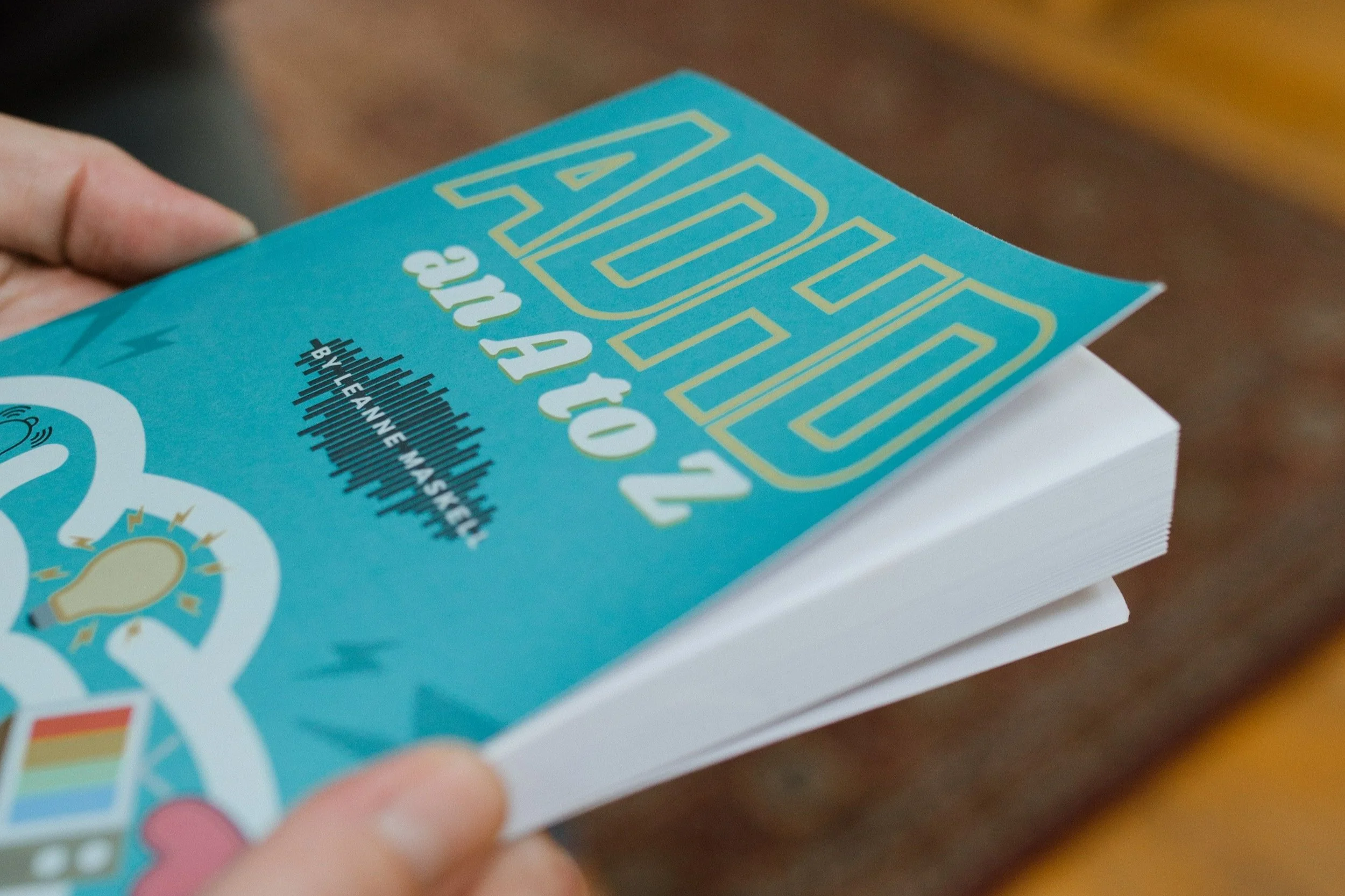
ADHD Coaching FAQs
What is ADHD coaching? Why is it useful? What can ADHD coaching help with? Is ADHD coaching the same as therapy? All your questions answered here.
1. What is ADHD coaching?
It’s a forward-focused, structured process, involving a collaborative partnership which empowers people with ADHD to transform their lives with unconditional acceptance, in gaining an awareness of their unique strengths, and overcoming challenges.
We have conversations that empower you to figure out what you want, what’s stopping you from achieving that, and how to break it down into actions to implement it. The real work is done by you in implementing the actions between sessions, which can become experiments: learning what works and what doesn’t in a judgement free zone.
It’s like building a house, where coaching is the scaffolding to support you in getting the frameworks in place. Once the strategies that work for you have clicked, you don’t need me anymore - the responsibility lies with you. My job is to work myself out of a job.
2. Is it the same as therapy?
No. Whereas therapy is about answering the ‘why’ questions (e.g why did X happen?), coaching is about the ‘who’, ‘what’, and ‘how’ questions. Therapy is important for processing emotions and feelings, whereas coaching is more forward focused – it’s focused on outcomes, and tangible change.
Therapy is also thought of as a more ongoing, potentially lifelong process, whereas coaching usually tends to be for a time-limited period, such as a few weeks or months.
3. How is ADHD coaching different from normal coaching?
ADHD coaching offers expertise knowledge of this unique neurodevelopmental condition and how this applies to a coaching context. A few examples include:
‘Pills don’t give skills’: coaching can help with implementing strategies of how to use the potential benefits gained from medication, diagnosis or ADHD-awareness. For example, if you’re suddenly able to focus with medication, this helps you choose what to focus on.
‘Doing what you know’: a coach with ADHD expertise understands how to activate an ADHD brain to its full potential – for example, extra preparation with accountability, implementing actions, and overall engagement.
‘Maybe it’s not my fault’: we can offer understanding, education and compassion. It’s very empowering for a person with ADHD to understand their unique neurodiversity, and to replace shame with self-compassion and responsibility. Knowing that certain experiences are a ‘normal’ part of ADHD helps a lot with understanding them and being able to identify ways of asking for help, such as reasonable adjustments.
‘Name it to tame it’: ADHD can often show up in different ways which may not be apparent to neurotypical coaches, such as with Rejection Sensitive Dysphoria. We can offer specific strategies and exercises to address the underlying causes of challenges and help people learn about themselves.
Reaching your limitless potential: ADHD coaching can be useful for everyone to understand how it works and how to get the best out of people who have it. This could also include people who don’t have ADHD themselves, such as a manager of an employee with ADHD.
4. What can ADHD coaching help with?
Everything! Some examples of things I’ve coached people on include:
· Organisation / executive functioning: establishing daily routines & healthy habits, time management, getting ‘boring’ chores done, prioritizing, dealing with distractions / procrastination, and deep cleaning the house (which was said to be harder than getting a Master’s degree!).
· Work (employees, self-employed & unemployed people): in general, how to work int he most effective & happy way. This has included: improving relationships with colleagues, talking about ADHD at work / identifying & asking for reasonable adjustments, overcoming specific challenges such as bullying, meeting deadlines, project management, dealing with demanding workloads, considering career options, identifying strengths, skills & talents, interview practice, delegation, and coping with stress. Access to Work can fund 100% of ADHD coaching for employees.
Studying (school & university students): managing studies, setting routines, structuring essays, identifying how they learn best & potential reasonable adjustments tailored to them, and considering future career options. One teenager said it was much more useful than the careers service at school!
Emotional regulation: improving self-esteem, self-confidence, body-image, overcoming Rejection Sensitive Dysphoria, emotional ‘flooding’ / mood swings, co-dependency, people pleasing, loneliness, and general engagement with people who do / do not have ADHD.
Physical health: relaxation, sleep, overcoming addictions such as alcohol and smoking, observing the effects of medication, implementing healthy habits such as regular exercise and cooking meals.
Everything else! Being an ADHD coach is never boring, because everyone comes with such incredibly unique and amazing stories – every day is different!
5. Should I get a coach?
Coaching can be extremely helpful for anyone, but ultimately, it has to come from YOU. You only get out of it as much as you put in, which is why it’s really important to find a coach that you click with.
If you have something you want in your life – a goal, a change, a challenge you’re facing – then coaching can be incredible, regardless of whether or not you have ADHD. I’ve coached people who don’t have ADHD, and it works just the same.
Everyone can benefit from a moment to pause, step back and figure out what they really want out of their life. I’ve never met anyone who doesn’t want to change and improve something – but often their habits are not matching their intentions. My job is to help them change that to fulfil their long-term goals and dreams.
Book a free introductory call with me here to learn more.

Is ADHD a disability?
Did you know ADHD can be a disability? On International Day of Disabilities, learn more about invisible disabilities.
As an ADHD Coach, I have a window into the lives of incredibly intelligent, passionate, and kind ADHD-ers – they can just often not usually be so kind to themselves! One of my favourite things about coaching is how speaking to someone who understands the unique wiring of your brain can shine a completely new light on the way we see ourselves and the world around us.
Despite around 80% of the UK’s disabled population having invisible disabilities, it’s still an area we don’t quite know how to handle as a society. Although we’re talking more openly about mental health, the shame involved in speaking up about a condition that impacts our ability to be ‘normal’, or to ask for help with this, can still often be incredibly scary and shameful. This can be because we’re relying on other people to believe us, after we’ve taken the difficult step of first believing ourselves.

Here are some of my favourite recent quotes from clients:
“When you say it’s not my fault, sometimes I let myself believe it, and it makes me feel so much better.”
“I was so shocked ADHD could be a disability, but when I think of how it took me 6 hours to do a task that took my friend 1 hour, I think that maybe it is, and maybe that’s not a bad thing.”
“When I was given the help I needed, I realised this wasn’t a ‘special’ adjustment or preferential treatment, as it did just literally level up the playing field between me and other people.”
“I thought I was lazy and stupid for 50 years, until I got the diagnosis.”
The Equality Act says a person is disabled if they have a physical or mental impairment that has a ‘substantial’ and ‘long-term’ negative effect on their ability to do normal daily activities. There are very high standards for being diagnosed with Attention Deficit Hyperactivity Disorder – usually at the level of having certain areas of your life seriously affected, over a long period of time.
So yes, ADHD can be a very serious, invisible disability. We can be disabled by our own brains, such as literally being unable to get out of bed, despite thinking a million hours an hour, suffering our own specialized version of internal torture. We can also be disabled by external barriers in our environments – such as by the stigma associated with ADHD in society, or having to fit into a ‘one-size-fits-all’ world that simply doesn’t make allowances for neurodivergence. or getting it wrong.
Before I was diagnosed, my life was seriously affected in all areas. I couldn’t keep an internship or job, didn’t even have a GP, had extremely bad relationships with my friends and family, binge drank alcohol 4-5 times per week in the aim of quietening down my brain, and was suicidal. When I was diagnosed, I said that ADHD wasn’t a ‘real’ problem. This ironically made me feel better at the time, as I was so scared of being sectioned to a mental health hospital in explaining how crazy I believed I was.
Things were so bad that I went on a 2-week holiday the next day and didn’t come back for a year, holding my hands up in admittance that ADHD was most definitely real, and destroying my life. Accepting this was a disability for me allowed me to stop beating myself up, to ask for the help I deserved, and to start taking responsibility for the things I wanted to change. I accepted that maybe I wasn’t always the problem in every single situation – maybe I deserved to live like everybody else.
From that moment on, I was unstoppable. I published a best-selling book on the modelling industry which was featured on the cover of the Times & Lorraine. I worked in mental health, disability and immigration law for over 2 years during the pandemic, influencing Government on Coronavirus & Brexit legislation - the furthest thing I could have imagined doing when I graduated with the belief I’d never be able to get a job!
I developed healthy relationships with the people in my life and found hobbies I enjoy. I published a book on ADHD, ‘ADHD: an A to Z’ which led to presenting for companies such as Microsoft. I became a Coach for the ADHD Advocate, finding true fulfilment, purpose and meaning in my work every single day – something I never thought I’d have. This week, I presented on invisible disabilities to Lewis Silkin, a law firm I’d previously dreamed of working at. Life has transformed into a continuing and limitless series of opportunities now that I’ve started working with my ADHD, instead of trying to be ‘normal’.
I still need to have phone backgrounds reminding me to ‘SAY NO’, sleep in my gym clothes occasionally to be able to go to yoga, and the bed sheets would probably never get changed if it weren’t for the cleaner. But in comparison to a few years ago, where I locked myself into an 8-month contract in a too-expensive flat that was directly opposite to my new job, as an attempt to force myself not to quit in the first week, I’m doing pretty well.
So, on this International Day of People with Disabilities, please remember to have some compassion for yourself, and to reflect on how well you’re doing, and how far you’ve come. If nothing else, you’re surviving through a global pandemic! If you know someone with a disability, whether it’s visible or invisible, please be brave enough to have open, honest, and curious conversations with them, exposing yourself the vulnerability of truly listening to what they say.
Here are some facts that shocked me:
Only 51.5% of disabled people are in work, compared with around 81.7% of non-disabled people.
There are more clothing lines in the world for dogs than there are for disabled people.
Disability affects 1 in 7 people worldwide.
ADHD can definitely be a disability, but accepting this also empowers us with limitless extraordinary abilities – book a free introductory call with me now to get started on yours.