
ADHD Pills Don't Give Skills
‘How did Leanne get 4 A’s in her AS Levels? Did she cheat?’ my economics teacher asked the entire class.
I was as surprised as she was. I couldn’t listen to a single word that was said in lessons, and got so bored that I often fell asleep, as my nervous system disengaged completely. I had no idea what was going on 99% of the time.
However, I’d got top marks, because I could cram the years’ worth of information into my brain under pressure and write really fast in an exam, before promptly forgetting it all. I went on to study law at a top university, where despite trying as hard as I could to listen to my lectures, they might as well have been in Chinese. I would beat myself up again and again for not being able to concentrate, or being able to focus on a page of my 400-pages weekly reading.
After a LOT of stress at the end of the year, I passed my exams with a 2:1. It was only when I graduated that my life visibly fell apart to others, because I couldn’t cope with the ‘real world’. Getting perfect exam marks doesn’t equate to being able to use that information - I couldn’t sit down to write a CV or apply for a job, and every time I tried to figure out what to ‘do’, I was so overwhelmed that I ended up making self-sabotaging decisions instead.
It felt like someone else had the remote control to my brain, and I was so afraid of what stupid decision I would make next that I became incredibly suicidal, convinced that I simply did not fit into society and would never get a ‘real’ job. Doctors told me repeatedly that I was fine, because I had a law degree. These comments simply reiterated what was going through my mind: I was stupid, lazy and somehow pretending to the entire world to be a functional human being when on the inside I was in a living hell.
When I eventually saw a private psychiatrist, he said I had such severe ADHD that he couldn’t believe I had made it to 25. Neither could I. Rather than chucking drugs at me, he said I had to come back a week later to finalise the diagnosis formally, after my holiday. However, whilst on holiday, I spontaneously moved country with someone I met on a beach, paying thousands of pounds for a partner visa – so didn’t end up going back to him for another year, until this inevitably failed.
I’d already written ‘the Model Manifesto’ by this point, entering into states of hyperfocus where I would work from 6am-12am without eating or getting up to do things like shower or go to the bathroom. Having ADHD doesn’t mean you don’t have the ability to pay attention at all, it just means you can’t control what you pay attention to, or how – so it can feel like a classroom of children are running your life.
When I started taking stimulant medication (Elvanse), it felt like I had put glasses on. I could see the mess around me and hear my own thoughts clearly for the first time in my life. However, I was so mortified about having to take drugs for my ‘mental health’, which everybody seemed to believe were essentially a money-making scam, and stressed about how expensive they were (£300 per month), that I tried to self-medicate. I tried to just take them on the ‘days I needed them’, undermining the whole point of taking them.
I lost 15kg in a few weeks, had acne, panic attacks, and became severely unwell. I stopped taking them all together. Fortunately, a few months later, I realised how stupid it was to refuse the proper help that I’d been fighting to hard to access, so I went to my GP and arranged a plan for them to be prescribed at a low dose. I decided to view them as a vitamin, and to stop talking about it to other people - and my life improved dramatically.
Not because I was suddenly able to study or work better - but because my brain was able to operate on the same neurochemical level as everybody else’s. Above anything else, having ADHD Coaching helped me the most. As a coach myself, I now meet people with ADHD every day who take this ‘life-changing’ medication and end up concentrating on completely the wrong things: ruminating over their thoughts, a piece of blu tac, or repeatedly rewriting the first paragraph of an essay. This is because pills do not give you skills.
Imagine that you wanted to sew a jumper for your whole life, but due to eyesight problems, have never been able to do it. Then you’re given glasses, so you can see the holes in the jumper, but you still don’t know how to sew. Coaching helps people learn and implement the actual skills they need to do this - not the medication. The medication simply helps your brain enter onto the same playing field as other people.
It’s the same for ‘study drugs’. Although you might be able to concentrate more on what you’re reading, unless you’ve got the structures in place to allow you to prioritize, process, retain and use that information, it’s absolutely pointless. For someone who doesn’t have ADHD to take these drugs, it would probably be like drinking 10 cups of coffee all at once – you’d just feel jittery and anxious. I used to drink 10 cups of coffee per day pre-diagnosis, which had zero impact on my brain or ability to concentrate, but it did help me get through the day. That is the difference between a person with and without ADHD.
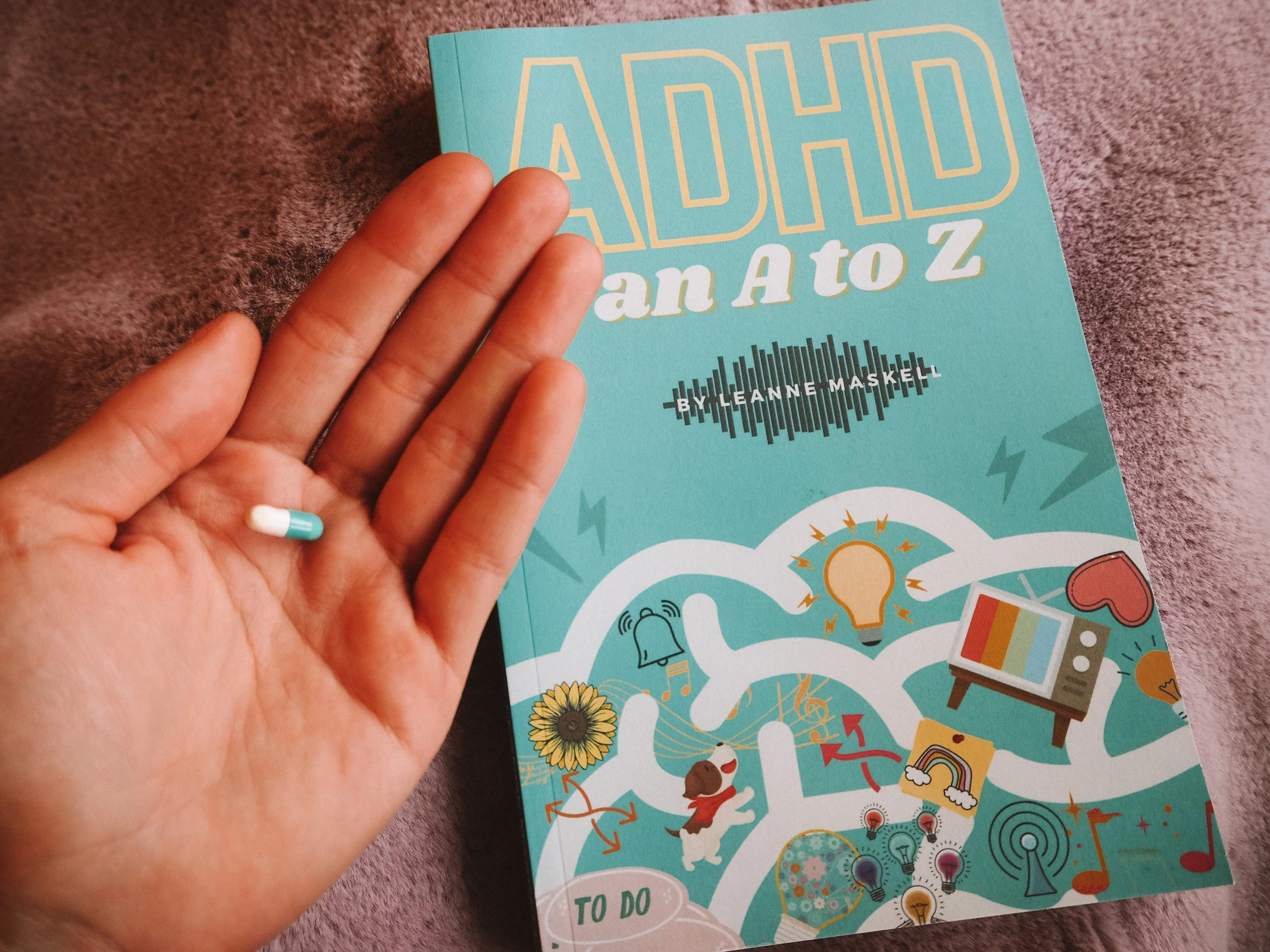
This medication is by no means freely available - the NHS waiting list for assessment is 7 years long, and prescriptions of this ‘Controlled Drug’ are subject to a very strict level of oversight. It’s also not a solution in and of itself, which is why I wrote ‘ADHD: an A to Z’, to help people help themselves with lifestyle changes and knowledge.